Every debt settlement starts with understanding your own situation: your accounts, your budget, and what you can realistically put on the table. debtself is educational software that helps you prepare for those conversations and keep track of them. You make every call. $249. One time.
Start Your DIY Settlement Assessment →Free · Takes 2 minutes · No credit check, no signup
Debt settlement is a negotiation between you and whoever holds the account. This section covers who you are actually talking to, what tends to move them, and where debtself fits into your preparation.
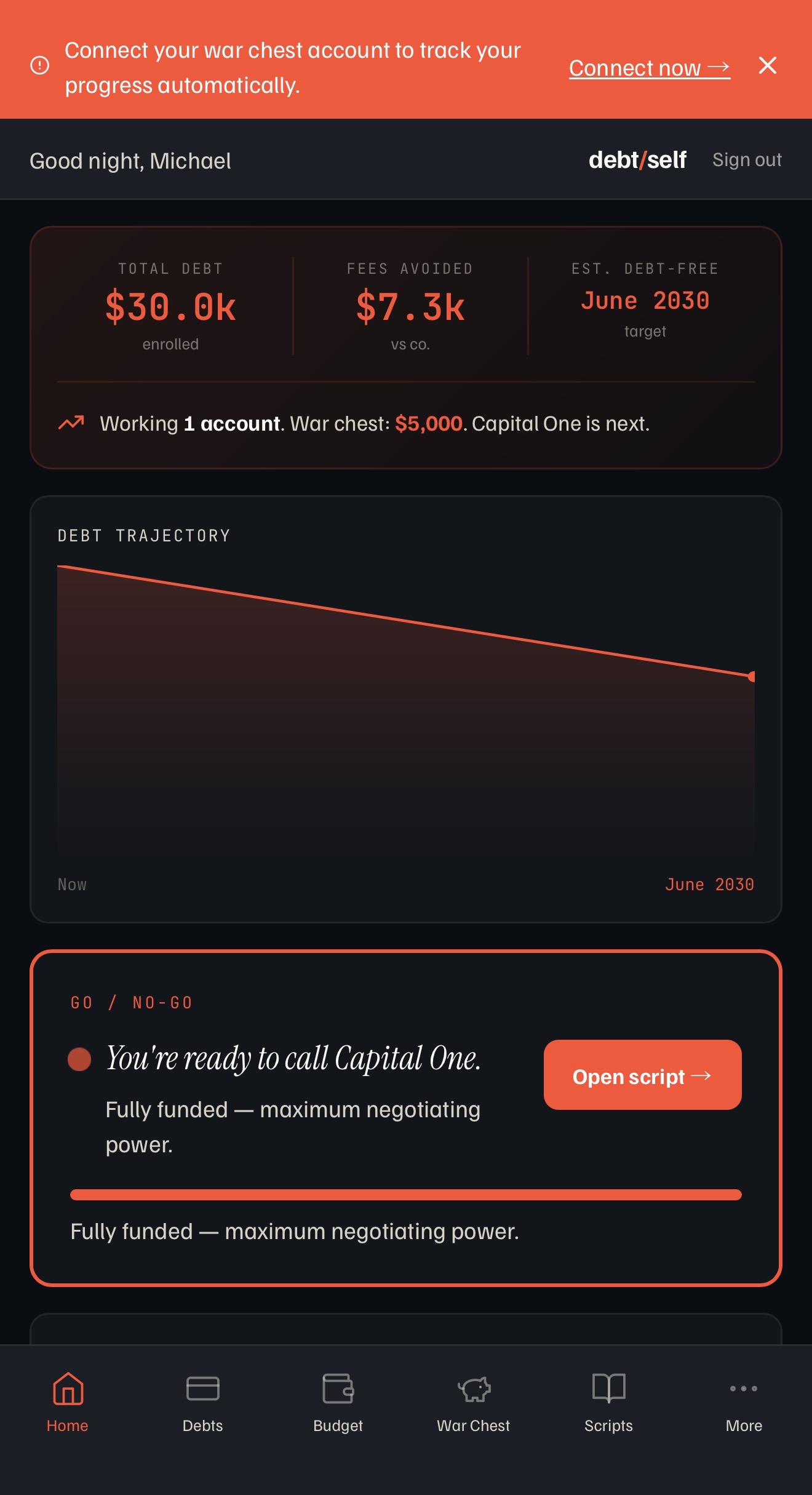
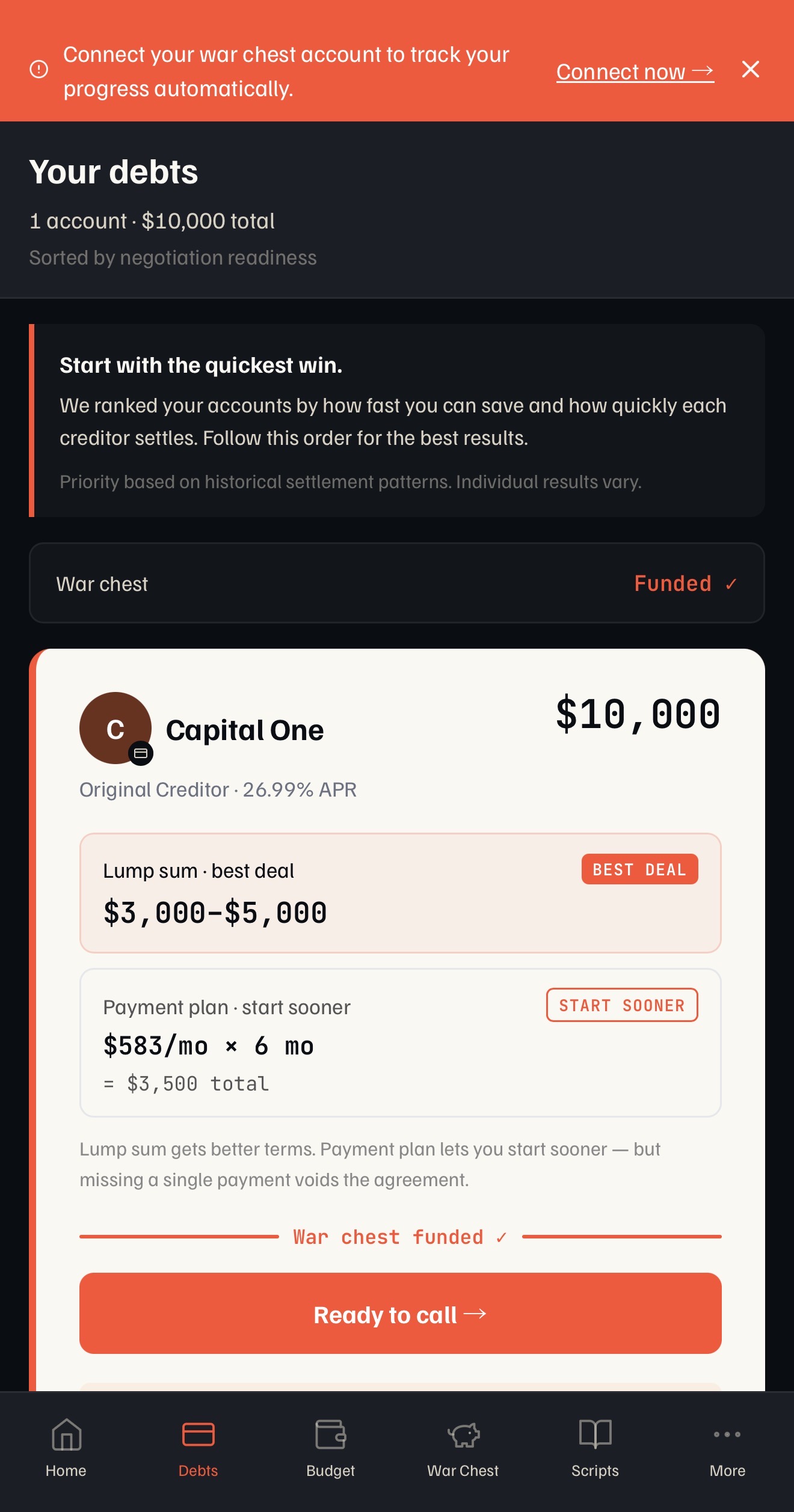
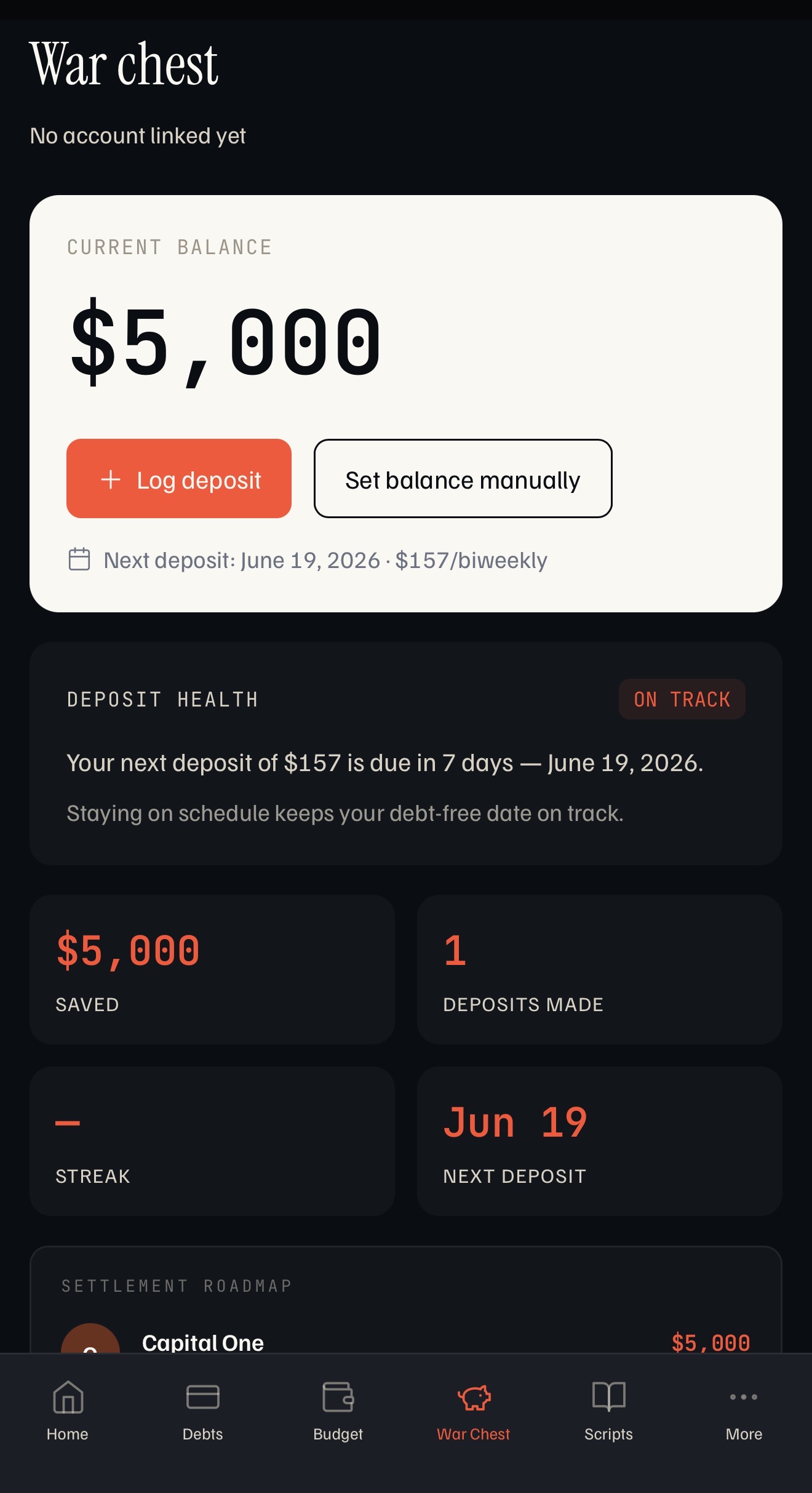
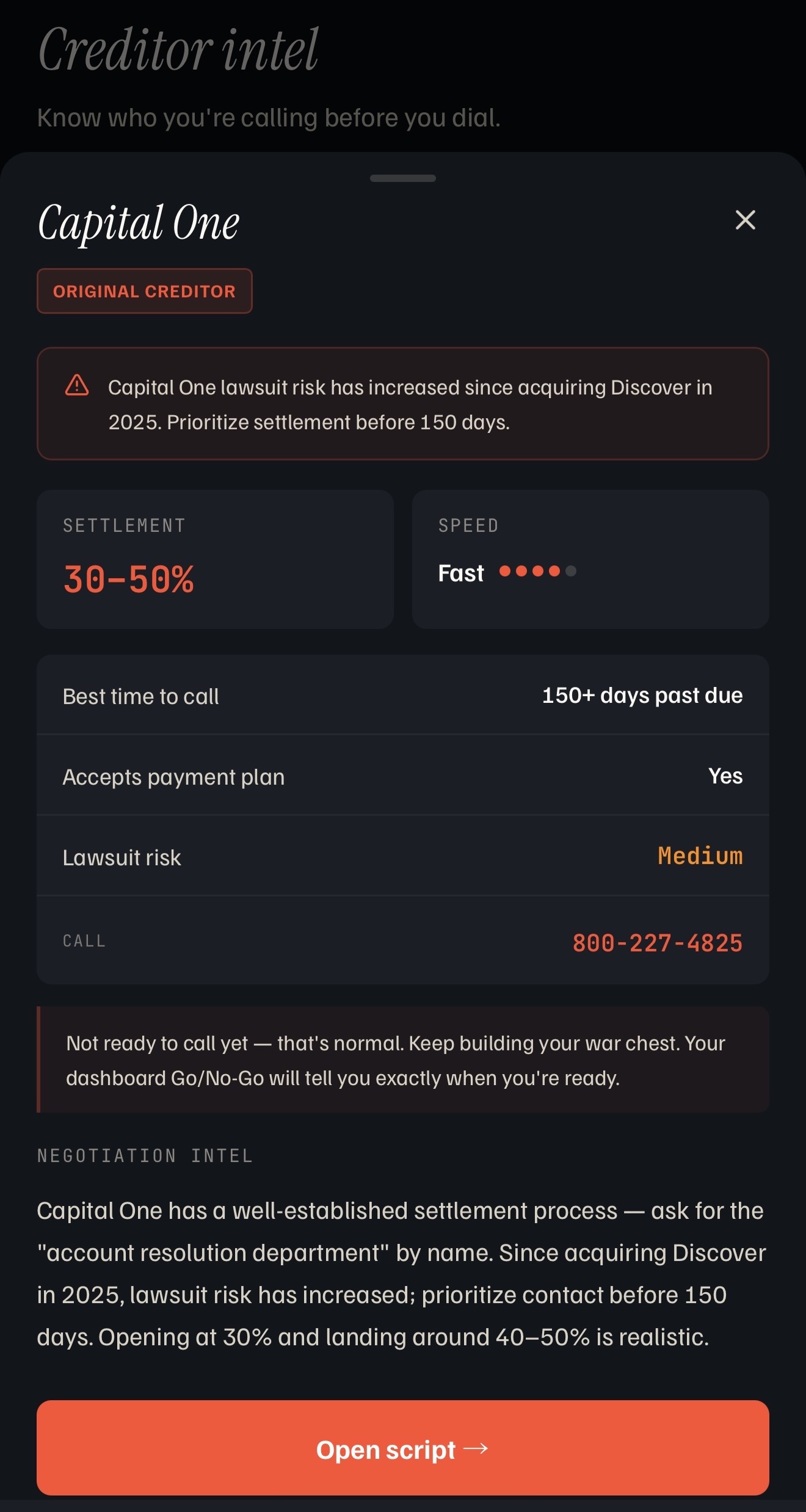
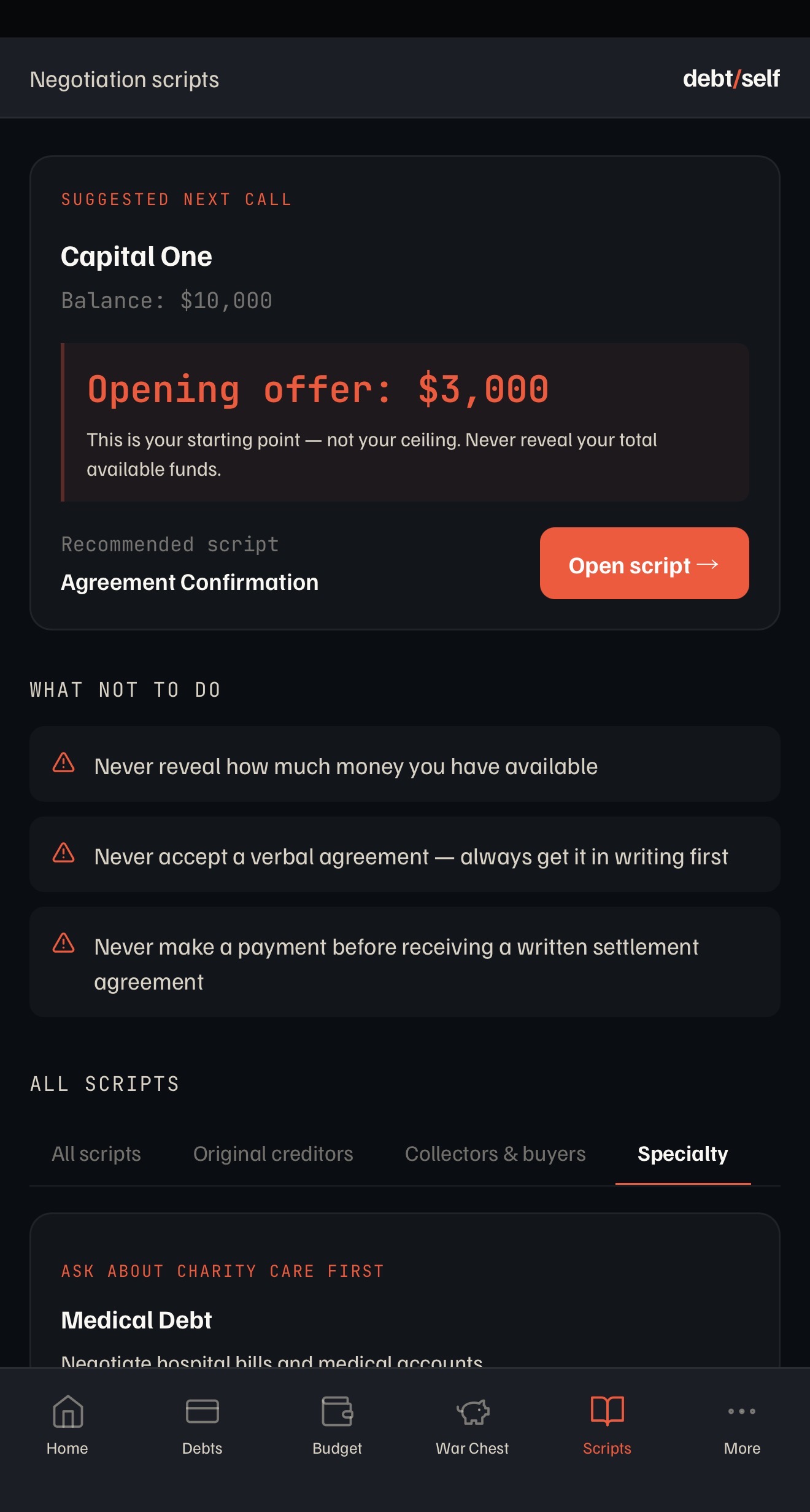
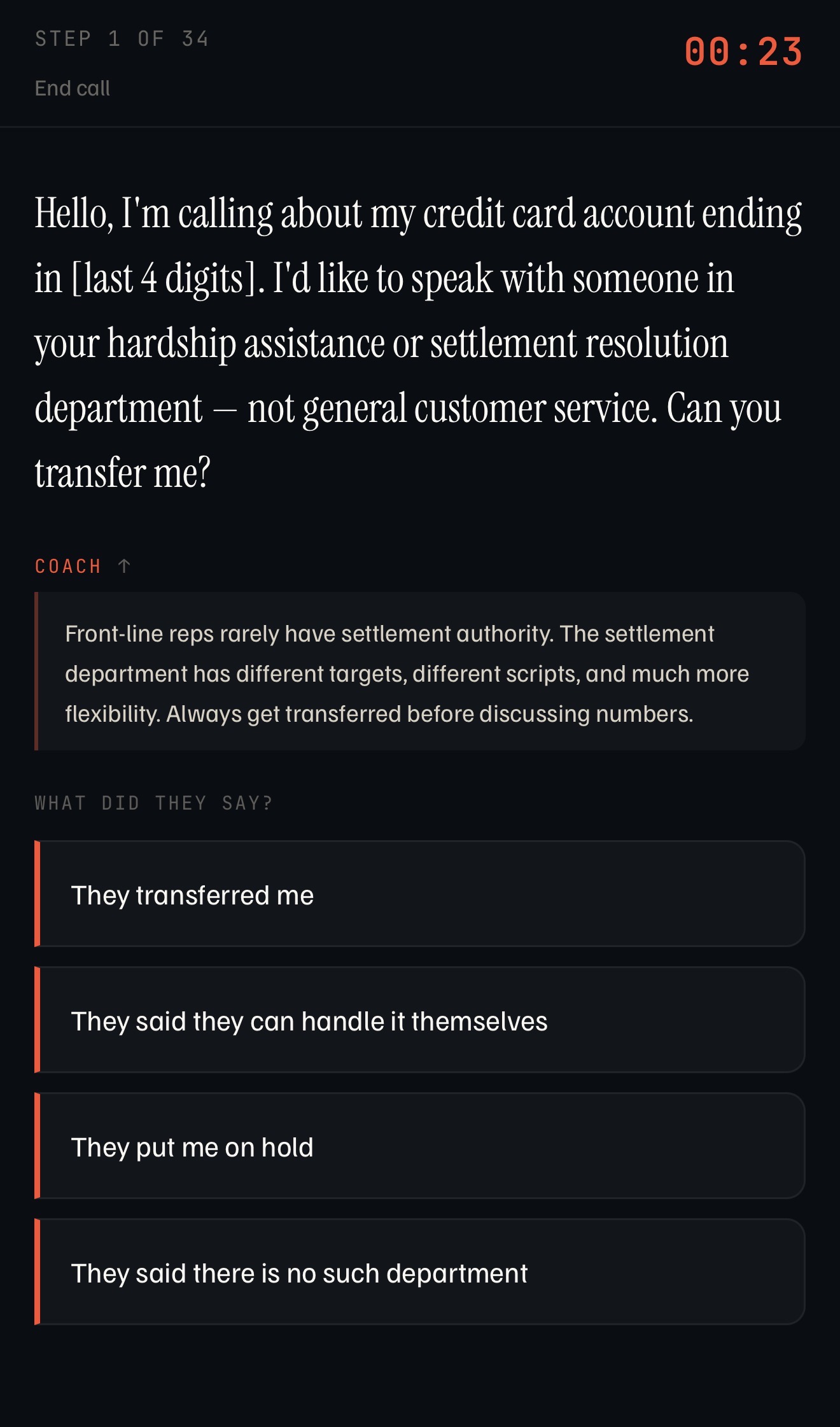
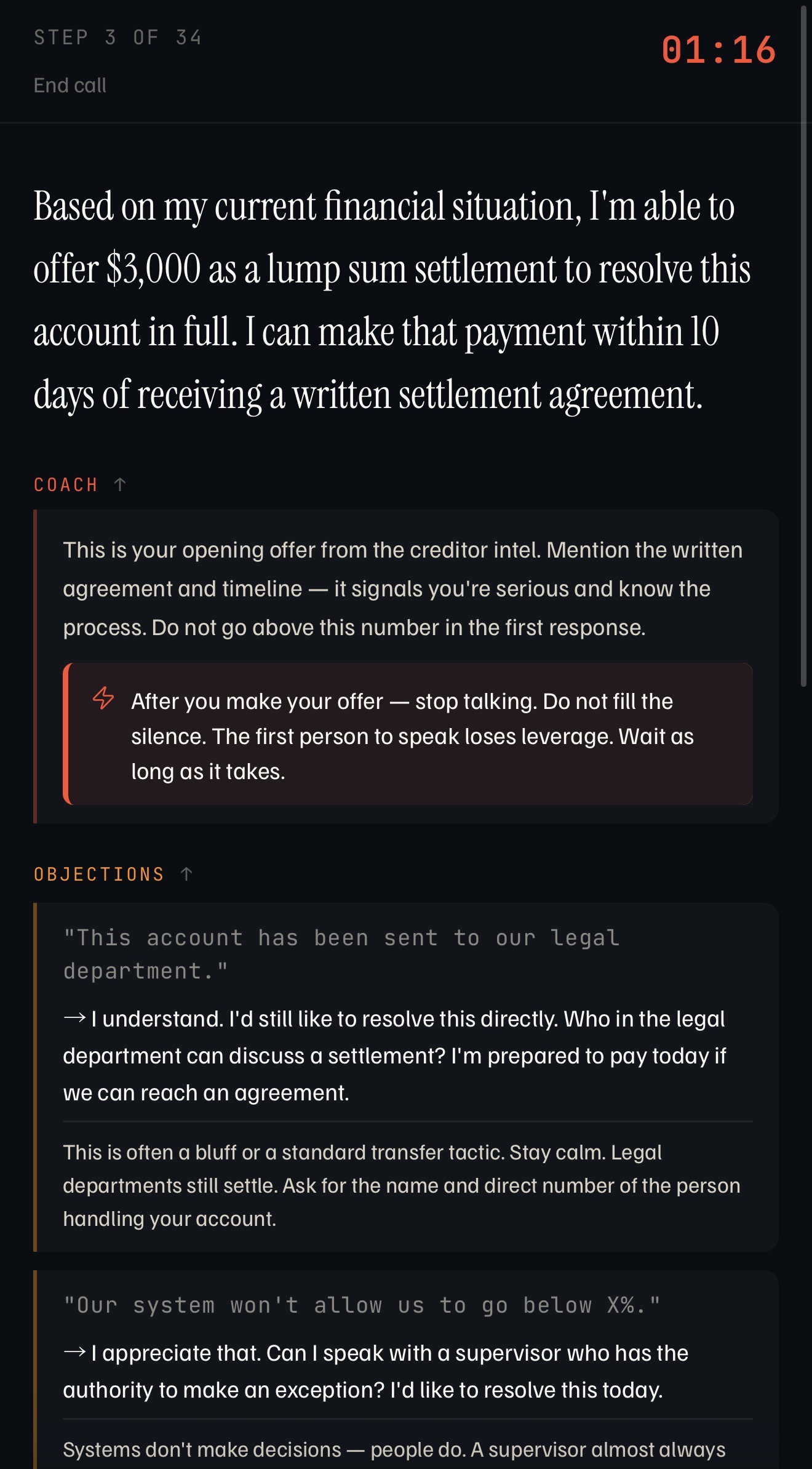
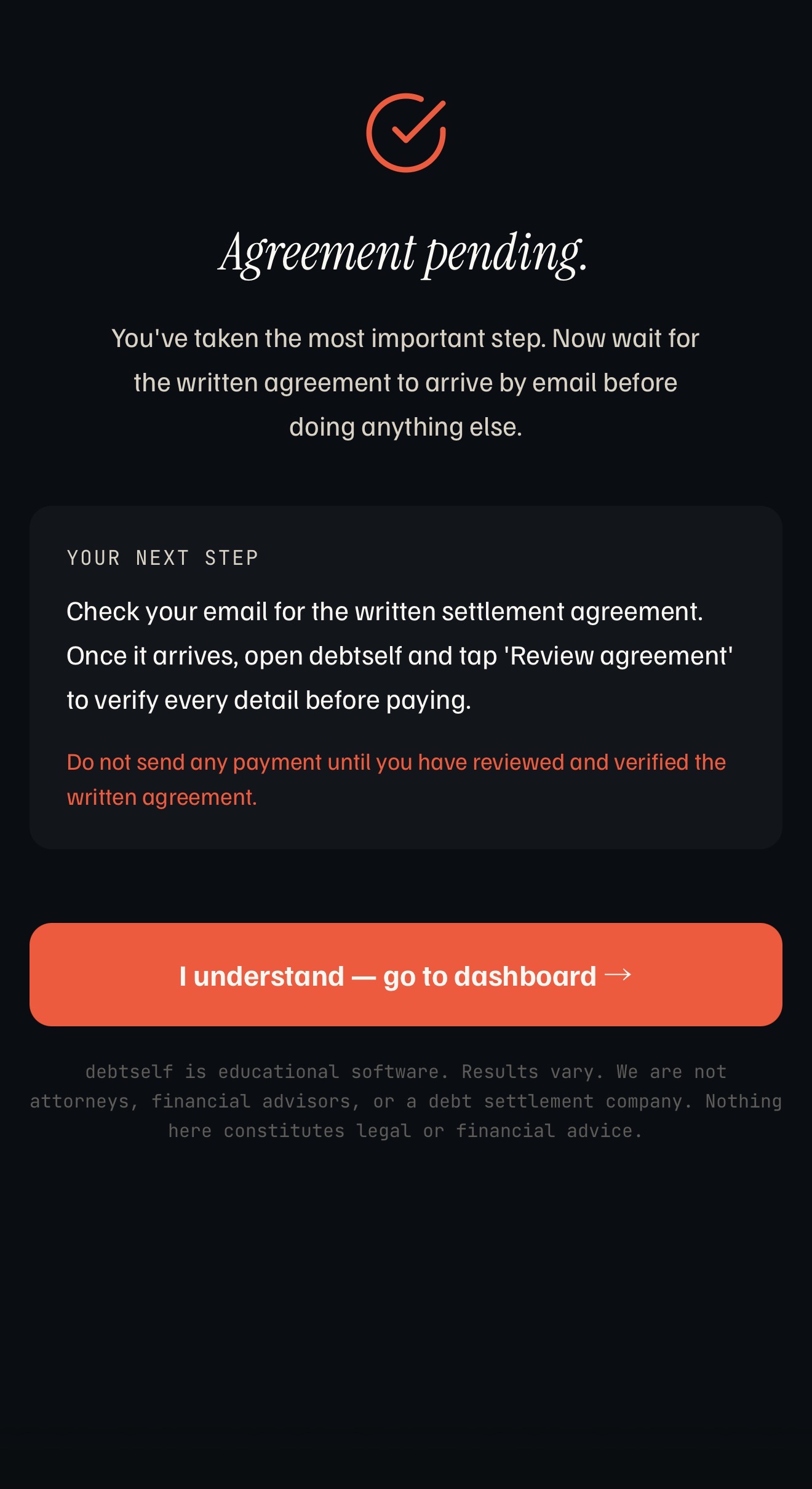
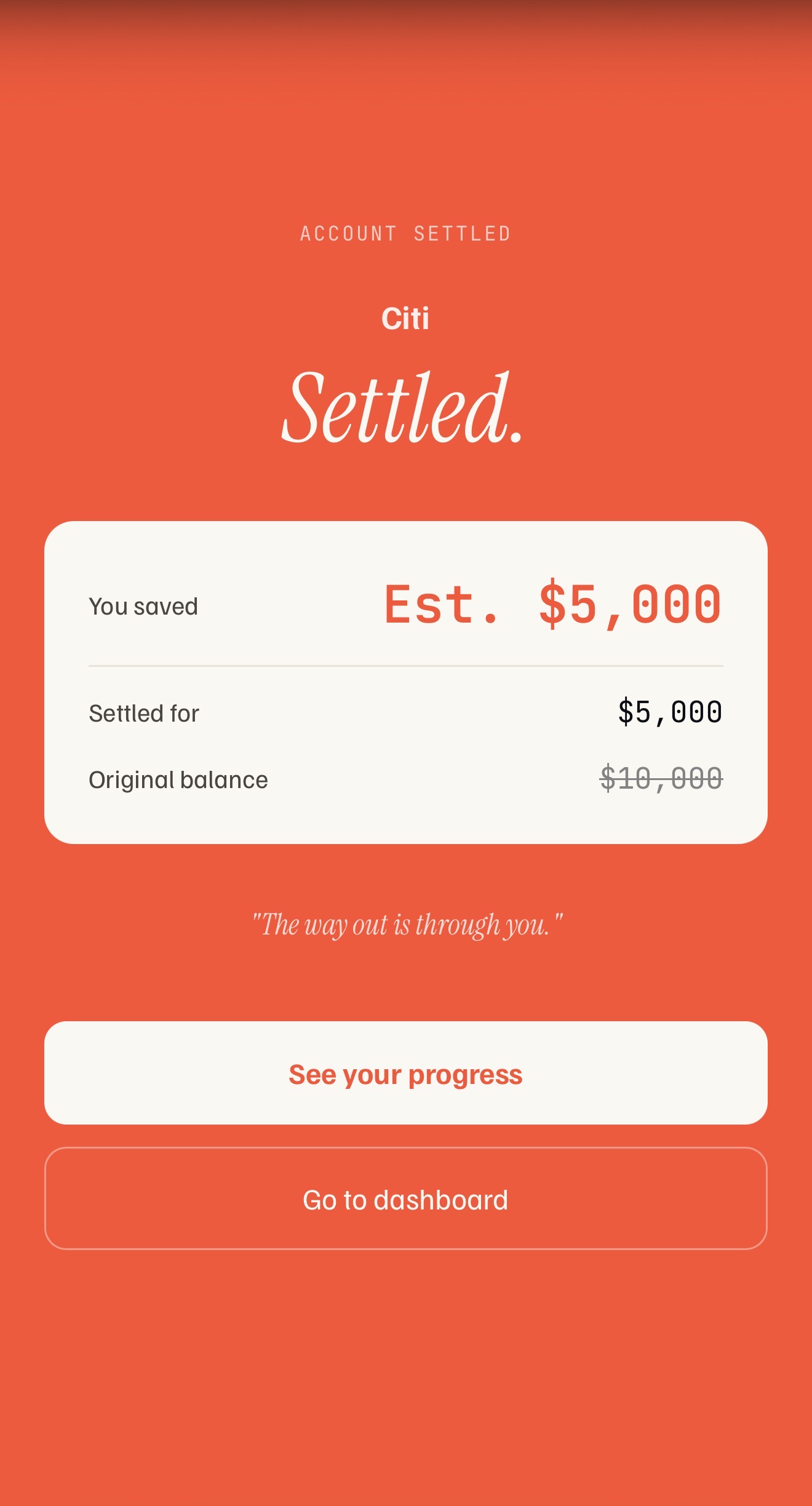
Screens shown are examples. Every figure, range, and date in the product is calculated from the numbers you enter, and none of it is a forecast of what a creditor will accept.
debtself is educational financial software for people who would rather make the calls themselves. You choose who to contact, what to offer, and when to stop. Our job is to get you ready before you dial.
Enter your accounts and budget. debtself calculates your monthly savings deposit, the pool that funds each settlement lump sum. You get a projected payoff date anchored to your first deposit and your own numbers.
When you have enough saved, open the Script Reader. It walks you through the exact words step by step, with a live call timer and objection handler. You read. They respond. You negotiate.
Get the agreement in writing before you pay anything, then log the call and mark the account settled. The next account on your roadmap becomes the target, and you repeat until done.
The scripts, the creditor research, and a considered order to work your accounts in. One payment of $249. The calls, and the decisions on them, stay yours.
Not talking points. Real, word-for-word scripts built from negotiation research, organized by creditor type and negotiation stage. They come with debtself, and they stay readable long after your first call.
The parts of debt settlement that most pages leave out. You should read these before you spend anything.
We built debtself because the alternative was handing a company a percentage of your own money to make phone calls you are allowed to make yourself. It is a fit if you want to handle those calls, and you want the preparation, the wording, and one place to keep it organized. It is not a fit if you want someone to negotiate on your behalf, or if you need certainty about how a particular creditor will respond, because nobody can offer you that. debtself is educational financial software: it does not contact your creditors, speak for you, or take part in the negotiation.
No subscription, no monthly fee, and no cut of whatever you settle for. Pay once and debtself stays yours, including future updates, new scripts, and new creditor files as we add them.
Yes. Any individual can negotiate directly with their creditors, or with debt buyers and collection agencies that have purchased their debt. debtself teaches you that same negotiation knowledge so you can do it directly. You have the legal right to negotiate and settle your own debts.
debtself is designed for unsecured debt: credit cards, personal loans, medical bills, and accounts that have been sold to debt buyers or collection agencies. It doesn't cover secured debt like mortgages or auto loans, or federal student loans.
Most creditors won't negotiate while you're current on payments, since they have no reason to. The standard settlement strategy involves stopping payments, letting accounts become delinquent (typically 90–120 days), and building your war chest during that time. debtself explains this clearly and helps you plan the timing. Your credit score will be affected, and you should weigh this against the financial savings.
That's exactly who debtself is built for. You don't need negotiation experience. The Script Reader walks you through every line, step by step, during the call. The "Before Your First Call" briefing tells you what to expect, including what the first 30 seconds of the call sound like. You go in with the words already in front of you.
A refusal today doesn't necessarily mean forever. Creditors' willingness to settle can change as accounts age. Many people find it helps to try again in 6–8 weeks, sometimes with a different representative. An original creditor's "no" can also change once the account is sold to a debt buyer, who may be open to a different settlement range.
Accounts already in collections are often the best candidates for settlement, since debt buyers purchase them at deep discounts and have room to negotiate. If you've received a lawsuit summons, don't ignore it. Respond before the deadline (usually 20–30 days). You can still settle after a lawsuit is filed, sometimes at better terms. debtself includes a "What If It Goes Wrong" guide covering this directly.
Debt consolidation rolls your balances into a new loan, so you still owe the full amount, just to one lender. Settlement negotiates to pay less than you owe and closes the account entirely. A settlement that is agreed and paid closes the balance. Consolidation reorganizes it. The strategies have different credit impacts and work better in different situations.

Debt settlement is not a secret. The wording, the research, and the order you work accounts in are all learnable. debtself is where we put them, so you don't have to assemble it yourself.